

What Can Be Used as Security for a Bridging Loan?
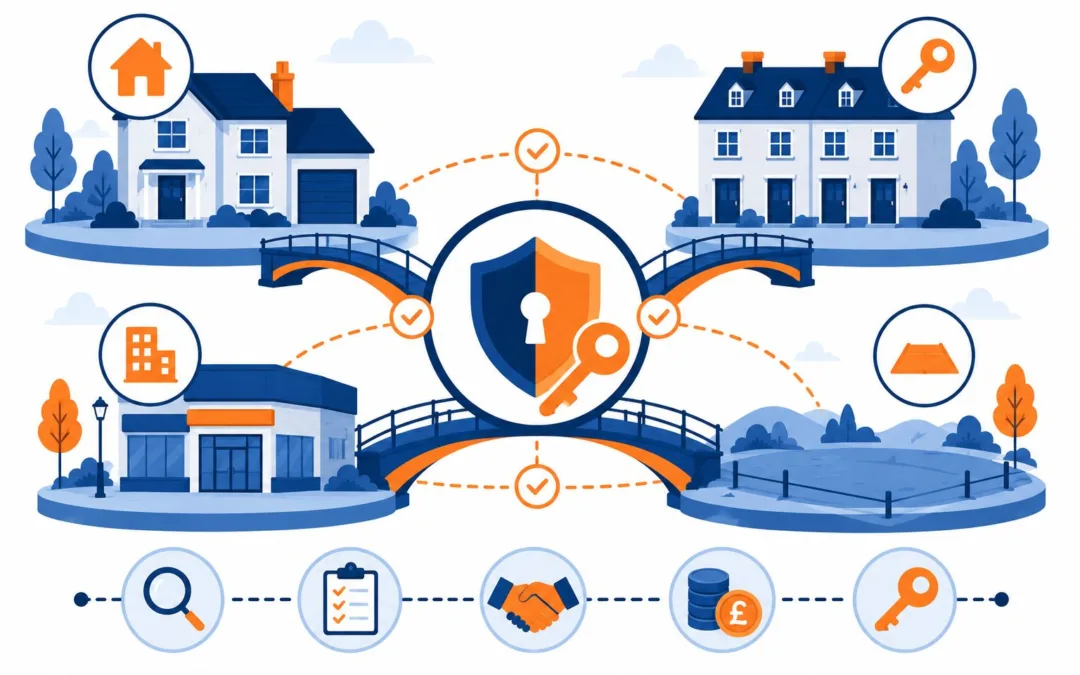
Understanding what can be used as security for a bridging loan is one of the most important parts of arranging short-term property finance. Bridging lenders rely heavily on the property or asset being offered as collateral because bridging finance is typically secured lending.
Unlike standard residential mortgages, bridging lenders can often accept a wider range of security types, including residential property, commercial buildings, land, and investment properties.
The type of security offered can affect:
- The amount you may be able to borrow
- The interest rate available
- The lender’s overall risk assessment
- The maximum loan term
- The available exit strategies
What Does Security Mean for a Bridging Loan?
Security refers to the asset used to secure the loan. In most cases, this is property.
If the borrower cannot repay the bridging loan, the lender may have the legal right to recover the debt through the secured property or asset.
Because bridging loans are secured lending, lenders focus strongly on:
- The value of the security property
- The condition of the property
- How easy the property would be to sell
- The loan-to-value ratio
- The borrower’s exit strategy
Can Residential Property Be Used as Security?
Residential property is one of the most common forms of security for bridging loans.
This can include:
- Main residences
- Second homes
- Investment properties
- Buy-to-let properties
- Holiday homes
Using Your Main Residence as Security
Some borrowers use their main residential property as security to raise short-term funds.
For example, bridging finance may be used to:
- Purchase another property before selling
- Resolve chain breaks
- Fund renovations
- Access temporary cash flow
Lenders will usually assess the available equity within the property and whether the borrower has a realistic repayment plan.
Can Buy-to-Let Properties Be Used?
Buy-to-let properties are commonly accepted as bridging loan security.
Property investors may use bridging finance against rental properties to:
- Expand portfolios
- Fund refurbishments
- Purchase auction properties
- Refinance existing borrowing
Some lenders specialise in bridging finance for property investors and landlords with more complex portfolios.
Can Commercial Property Be Used as Security?
Many bridging lenders accept commercial property as security.
Need help with bridging finance?
See what bridging finance options may be available
If this guide sounds like your situation, send a few details and we can help organise the key information before introducing you to an FCA-regulated bridging finance adviser where appropriate.
Make a bridging finance enquiryNo obligation. Mortgage Bridge acts as a bridging finance introducer.
Commercial bridging finance may be secured against:
- Office buildings
- Retail units
- Warehouses
- Industrial premises
- Mixed-use buildings
- Hospitality properties
How Commercial Security Is Assessed
Commercial properties are usually assessed differently from residential properties because factors such as business use, tenant arrangements, and market demand can affect risk.
Lenders may review:
- Lease agreements
- Occupancy rates
- Business viability
- Property condition
- Location demand
Commercial security may sometimes result in lower maximum loan-to-value limits depending on the property type.
Can Land Be Used as Security for a Bridging Loan?
Land can often be used as security for bridging finance, although criteria are usually stricter compared with standard residential property.
Types of Land Bridging Lenders May Accept
- Residential development land
- Commercial development sites
- Agricultural land
- Land with planning permission
- Brownfield sites
Does Planning Permission Matter?
Planning permission can significantly affect how lenders assess land security.
Land with approved planning permission may be considered lower risk because the development potential is clearer.
Unconsented land may still be acceptable to some lenders, but borrowing limits could be lower and pricing may be higher.
Can an Unmortgageable Property Be Used as Security?
Some bridging lenders will accept properties that standard mortgage lenders consider unmortgageable.
This can include properties that:
- Lack functioning kitchens or bathrooms
- Require structural work
- Have short leases
- Contain non-standard construction
- Are considered unsuitable for immediate mortgage lending
Bridging finance is commonly used to purchase and refurbish these properties before refinancing onto a standard mortgage later.
You can learn more about lender assessments in our guide on what mortgage lenders look for on bank statements.
Can Multiple Properties Be Used as Security?
Yes, some lenders allow multiple properties to be used as security for one bridging loan.
This is sometimes called cross-collateralisation.
Why Use Multiple Properties?
Using multiple properties may help:
- Increase borrowing capacity
- Reduce loan-to-value ratios
- Strengthen the application
- Support larger development projects
However, borrowers should understand that multiple assets may be at risk if repayment problems arise.
Can Bridging Loans Be Secured Against Overseas Property?
Some specialist lenders may consider overseas property as part of a wider security arrangement, although this is less common.
Most bridging lenders prefer security located within familiar legal jurisdictions due to enforcement and valuation considerations.
Applications involving overseas assets are often assessed individually.
Do Bridging Lenders Accept Second Charge Security?
Yes, some bridging loans are arranged as second charge loans.
This means another lender already holds the first legal charge on the property.
How Second Charge Bridging Loans Work
With second charge security:
- The existing mortgage remains in place
- The bridging lender takes a secondary legal charge
- The first lender is repaid first if the property is sold
Because second charge lending involves additional risk, loan-to-value limits may be lower.
How Do Lenders Value Security for a Bridging Loan?
Bridging lenders usually require a professional valuation before approving the loan.
The valuation helps lenders understand:
- The property’s current market value
- The expected resale value
- The condition of the asset
- Potential risks affecting repayment
Loan-to-Value Ratios
The loan-to-value ratio (LTV) compares the loan amount against the property value.
For example:
- A £150,000 loan against a £300,000 property equals 50% LTV
Lower LTVs are often viewed more favourably by lenders because they reduce risk exposure.
What Makes Strong Security for a Bridging Loan?
Lenders usually prefer security that is:
- Easy to value
- Easy to sell if required
- Located in stable markets
- Supported by clear ownership documentation
- Backed by a realistic exit strategy
Properties in desirable areas with strong demand may be viewed more positively than highly specialised or difficult-to-sell assets.
What Cannot Usually Be Used as Security?
While bridging lenders can often be flexible, certain assets may be more difficult to use as security.
This can include:
- Very remote or inaccessible properties
- Properties with severe legal disputes
- Unsafe or heavily damaged structures
- Assets with unclear ownership
- Certain highly specialised commercial properties
Each lender has different criteria, so acceptance varies depending on the circumstances.
Does Credit History Affect Security Requirements?
Credit history can affect how lenders assess bridging applications, although security and exit strategy are often major considerations.
Borrowers with adverse credit may still be considered if:
- Sufficient equity exists
- The security property is strong
- The exit strategy is realistic
- The loan-to-value ratio is sensible
We cover related topics in our guides on mortgages after bankruptcy and mortgages with a debt management plan.
What Is an Exit Strategy?
An exit strategy explains how the bridging loan will be repaid.
Common exit strategies include:
- Selling a property
- Refinancing onto a mortgage
- Completing a development project
- Receiving business or investment funds
Even with strong security, lenders usually require a clear repayment strategy before approving bridging finance.
You can learn more about this in our guide on open vs closed bridging loans.
Final Thoughts
Many different property types can potentially be used as security for a bridging loan, including residential homes, buy-to-let properties, commercial buildings, land, and refurbishment projects.
Bridging lenders primarily focus on the strength of the security property and the realism of the exit strategy when assessing applications.
Because criteria vary significantly between lenders, the type of property being offered can influence loan size, rates, and available terms.
Understanding how lenders assess bridging loan security can help borrowers prepare more effectively before applying.
This guide provides general information only. Personalised mortgage advice should always come from a regulated mortgage adviser.
Check your credit in detail
View your full credit report
See your credit information from all three major credit reference agencies with Checkmyfile. Try it free, then it becomes a paid monthly subscription. You can cancel online anytime.
Check your credit report
Important information: Mortgage Bridge provides information only and acts as a mortgage introducer. We do not provide mortgage advice or make lender recommendations. We can introduce you to an FCA-regulated mortgage adviser who can provide personalised mortgage advice.