
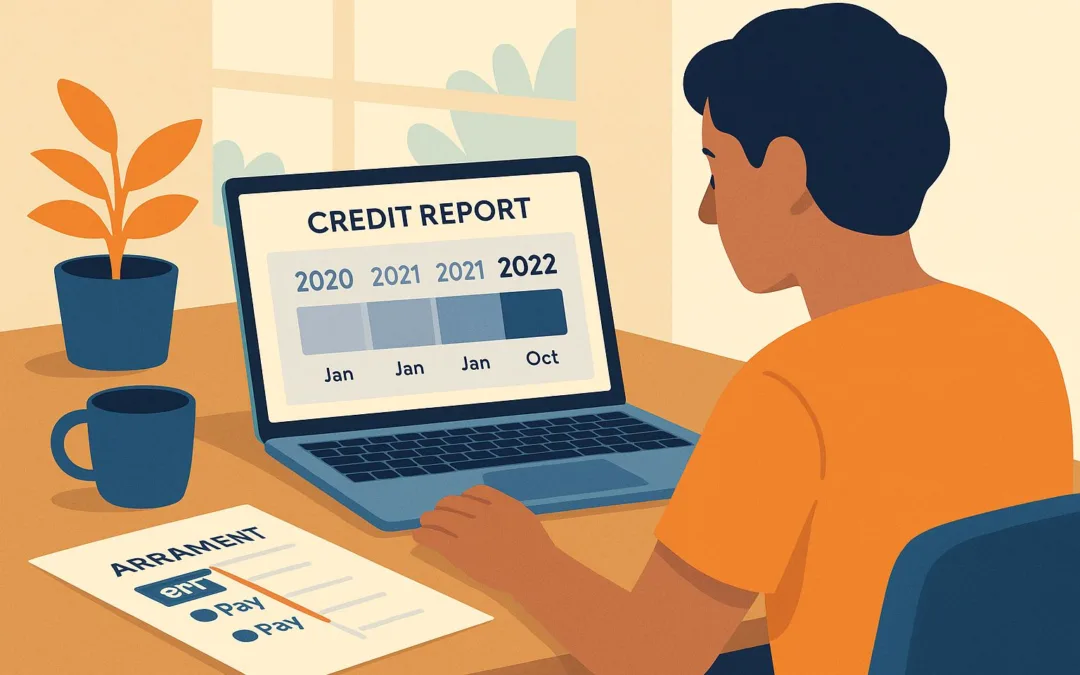

Do Banks Check Old Credit Files? Mortgage Approval Guide
When applying for a mortgage, many borrowers worry about older issues from years ago — perhaps old defaults, past missed payments or historic borrowing that no longer reflects their financial situation today. A common question is: do banks check old credit files, and how far back do lenders really look when assessing a mortgage?
This guide explains how much historic information banks can access, what lenders actually review, and how older credit events affect mortgage approval today. This article provides general information only and does not offer regulated mortgage advice.
Do Banks Check Old Credit Files When You Apply for a Mortgage?
Lenders check your current credit file, not previous or archived versions.
However, your current file contains up to six years of historic credit data, which allows lenders to assess:
- Past repayment behaviour
- Older defaults and CCJs still within the six-year window
- Long-term account history
- Patterns of credit usage
- Previous arrears and settled debts
Lenders cannot view data that has expired and is no longer stored by credit reference agencies.
How Far Back Do Credit Files Go?
Your UK credit report shows:
- Repayment history: 6 years
- Defaults: visible for 6 years from default date
- CCJs: visible for 6 years from the judgment date
- Missed payments: recorded for 6 years
- Settled accounts: remain for 6 years after closure
Once information is older than six years, it typically falls off your credit file and is no longer visible to mortgage lenders.
Do Banks Access “Old” Credit Files From Years Back?
No.
Banks only see the current version of your credit report at the time of application. They cannot access older credit files or previous versions stored by credit agencies.
This means:
- Old defaults beyond six years are not visible
- Old CCJs beyond six years are not visible
- Historic arrears older than six years are not visible
- Closed accounts beyond six years are not visible
If the data has dropped off the file, lenders cannot retrieve it.
What Historic Information Can Banks Still See?
Although lenders cannot view expired credit data, several types of historic information may still be discoverable:
1. Linked Addresses and Financial Associations
These records remain unless manually removed.
They do not show old credit issues but allow lenders to confirm identity and spot potential discrepancies.
2. CIFAS or Fraud-Related Markers
If present, these may remain visible for up to 6 years.
These markers relate to fraud prevention, not credit behaviour.
3. Current Accounts With Long Histories
If a credit account remains open, lenders may view its full active history, even beyond six years.
For example:
A credit card held for ten years may show the entire payment history.
4. Public Records
Bankruptcy and IVA details may be visible for set periods on public insolvency registers, even if not shown on your credit file.
Need help with your mortgage?
See what mortgage options may be available
If this guide sounds like your situation, send a few details and we can help organise the key information before introducing you to an FCA-regulated mortgage adviser where appropriate.
Make a mortgage enquiryNo obligation. Mortgage Bridge acts as a mortgage introducer.
Do Lenders Download and Keep Old Credit Reports?
Some lenders store copies of the report taken at application time, but:
- These are not shared between lenders
- They are not checked in future applications with other banks
- They do not allow access to older versions of the credit file
Each mortgage application triggers a fresh report from current data only.
How Lenders Use Historic Credit Information
Even within the six-year window, lenders weigh the relevance of older issues differently.
1. Issues within the last 12 months
Most significant to lenders; may restrict high street options.
2. Issues 1–3 years old
Still relevant but easier for lenders to consider with strong recent conduct.
3. Issues 3–6 years old
Often treated as historic; impact depends on severity and overall profile.
4. Older than 6 years
No longer visible (unless linked to public records).
Do Banks Look Beyond Your Credit File?
Yes. Lenders cross-check other information when assessing mortgage eligibility.
1. Bank Statement Conduct
Banks review 3–6 months of recent statements to assess:
- Financial stability
- Overdraft reliance
- Returned direct debits
- BNPL usage
- Spending behaviour
Statements offer context that historic credit files cannot.
2. Affordability Data
Lenders review:
- Income
- Fixed outgoings
- Other debts
- Household spending
Even with a clean credit file, poor affordability may limit options.
3. Employment and Income Stability
Historic credit issues matter less when income shows strong, stable recent patterns.
Will Older Credit Problems Affect Mortgage Approval?
Only if the issues are still visible or reflected in recent behaviour.
Older issues usually do not affect approval if:
- They are more than six years old
- Recent behaviour is stable
- No new adverse credit exists
- Bank statements look healthy
Older issues may still affect approval if:
- Multiple serious events occurred within the last six years
- There is ongoing arrears or unresolved debt
- Affordability is tight
- The applicant has limited recent credit history
Lenders assess the whole financial picture, not just isolated entries.
Do Banks Check Financial Associations From the Past?
Yes — if you remain financially linked with someone (e.g., through a joint account or joint credit).
If the association is no longer relevant, you can request its removal.
A financial association may impact lending decisions if the linked person has:
- Poor credit
- Current defaults
- Recent arrears
Lenders do not check that person’s old credit file, only their current report.
How to Strengthen Your Application (General Information Only)
Although not advice, many applicants improve their position by:
1. Ensuring all current accounts are paid on time
Recent conduct heavily outweighs older issues.
2. Reducing credit utilisation
Helps improve credit scores and affordability.
3. Checking all three credit files
Confirms what lenders can actually see.
4. Ensuring old financial associations are removed
Prevents lenders assessing someone else’s current credit.
5. Building a deposit buffer
Higher deposits reduce lender risk.
6. Keeping bank statements stable for 3–6 months
Predictable spending reassures underwriters.
Common Scenarios
Scenario 1: Default from seven years ago
Not visible; lenders won’t check older files.
Scenario 2: CCJ from five years ago, now settled
Visible but impact depends on recent conduct.
Scenario 3: Several missed payments three years ago
Still visible; lenders consider context and recency.
Scenario 4: No credit in six years
Lenders cannot see older credit, so they rely heavily on bank statements and current affordability.
Summary
So, do banks check old credit files?
In short: lenders only see the current version of your credit report, which contains up to six years of history. They cannot access older, expired credit files, and once information drops off your report, it does not affect future mortgage applications.
What matters far more to lenders is:
- Your recent repayment behaviour
- Current credit utilisation
- Bank statement conduct
- Affordability and income stability
- Deposit size
This article provides general information only. Personalised guidance requires regulated mortgage advice.
Check your credit in detail
View your full credit report
See your credit information from all three major credit reference agencies with Checkmyfile. Try it free, then it becomes a paid monthly subscription. You can cancel online anytime.
Check your credit report
Important information: Mortgage Bridge provides information only and acts as a mortgage introducer. We do not provide mortgage advice or make lender recommendations. We can introduce you to an FCA-regulated mortgage adviser who can provide personalised mortgage advice.