

How Far Back Lenders Actually Look on Your Mortgage Application
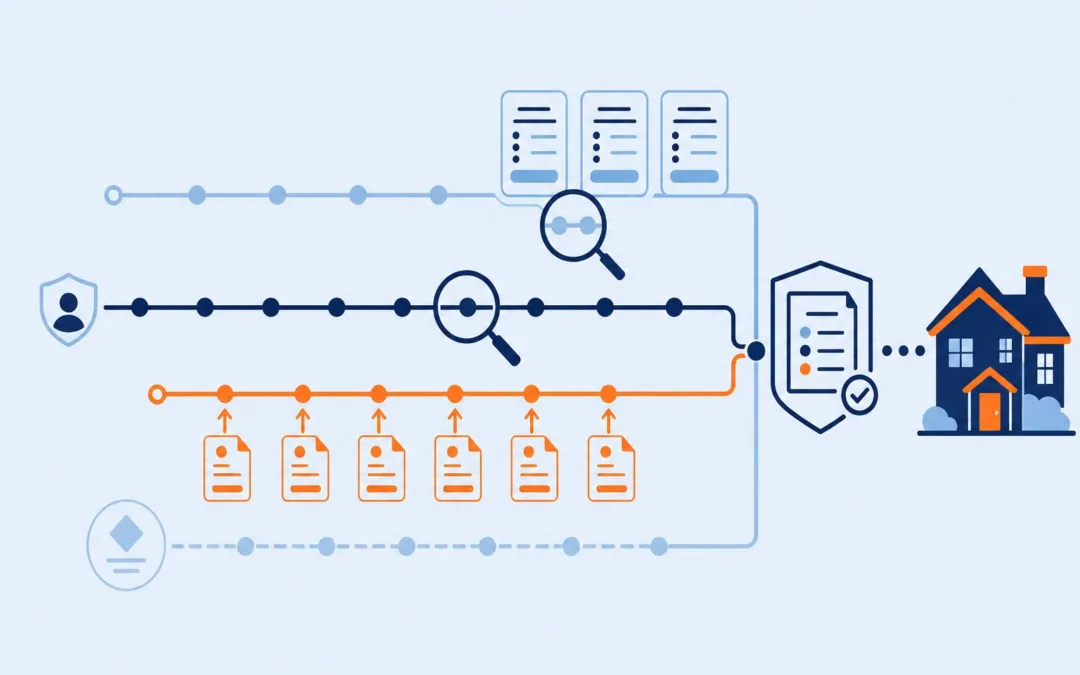
Understanding how far back lenders actually look is a key part of preparing for a mortgage application in the UK. Whether applying for a residential or buy-to-let mortgage, lenders assess your financial history to determine risk, affordability and reliability. This includes reviewing credit history, income records, bank statements and past financial behaviour.
The timeframe lenders examine can vary depending on the type of mortgage, your circumstances and the specific lender’s criteria. Some checks focus on recent activity, while others look several years into your financial past. Knowing what is likely to be reviewed can help applicants understand how their financial profile may be assessed.
This guide explains how far back lenders actually look across different areas of your finances, including credit reports, employment history and affordability checks. It also explores how this may differ for buy-to-let mortgages and more complex borrower scenarios.
How far back lenders actually look at your credit history
Lenders typically review your credit history over the past six years when assessing a mortgage application.
In the UK, most credit reference agencies retain data such as missed payments, defaults and County Court Judgments (CCJs) for six years. Mortgage lenders rely heavily on this data to understand how borrowers have managed credit commitments over time. Even if an issue has been resolved, it may still appear within this six-year window.
Recent credit behaviour often carries more weight than older events. For example, a missed payment within the last 12 months may be viewed more seriously than one that occurred five years ago. Lenders may interpret recent issues as a sign of ongoing financial pressure, while older issues may be considered less relevant if your financial conduct has improved.
Some lenders have stricter criteria regarding adverse credit, particularly for higher loan-to-value mortgages. Others may take a more flexible approach depending on factors such as deposit size, income stability and overall affordability. Criteria can vary widely between lenders.
How far back lenders actually look at your bank statements
Lenders usually review the last three to six months of bank statements as part of a mortgage application.
Bank statements provide insight into spending habits, income consistency and financial commitments. Lenders typically look for regular income payments, existing debts and evidence of responsible financial management. This includes identifying overdraft usage, gambling transactions or irregular income patterns.
Although the standard review period is relatively short, patterns within those months can raise questions. For example, frequent overdraft use or missed payments may prompt further scrutiny. In some cases, lenders may request additional statements if there are inconsistencies or if the applicant is self-employed.
For buy-to-let mortgages, lenders may also assess whether rental income is being received and managed consistently. This can be particularly relevant for landlords with existing properties, where financial track records may influence lending decisions.
How far back lenders actually look at employment and income history
Lenders generally review at least 12 months of employment history, although this can extend further depending on circumstances.
For employed applicants, lenders often require recent payslips and may request a P60 to confirm annual earnings. This helps establish income stability and reliability. A consistent employment record may be viewed positively, particularly if it shows steady or increasing income.
Self-employed applicants are typically assessed over a longer period, often requiring two to three years of accounts or tax calculations. This allows lenders to evaluate income trends and sustainability. Fluctuating income may lead to more cautious affordability assessments.
Applicants with gaps in employment or recent job changes may still be considered, but lenders may assess these situations more carefully. Factors such as industry stability, contract type and future earning potential can influence decisions.
Need help with your mortgage?
See what mortgage options may be available
If this guide sounds like your situation, send a few details and we can help organise the key information before introducing you to an FCA-regulated mortgage adviser where appropriate.
Make a mortgage enquiryNo obligation. Mortgage Bridge acts as a mortgage introducer.
How far back lenders actually look at your affordability and commitments
Lenders focus on your current financial position but may consider patterns from the recent past when assessing affordability.
Affordability checks typically involve reviewing income, outgoings and existing financial commitments. This includes loans, credit cards, childcare costs and living expenses. While the emphasis is on present affordability, recent financial behaviour can provide additional context.
Lenders may use stress testing to assess whether borrowers could afford repayments if interest rates increase. This is particularly important for buy-to-let mortgages, where rental income must often meet specific coverage ratios under stressed conditions.
Changes in financial circumstances, such as recently repaid debts or increased income, may positively influence affordability assessments. However, lenders may still consider whether these changes are sustainable over time.
How far back lenders actually look for buy-to-let mortgages
Buy-to-let lenders often assess both personal financial history and property-related income over several years.
In addition to standard credit and income checks, buy-to-let applications may involve reviewing rental income, existing property portfolios and landlord experience. Lenders may analyse whether rental income meets required yield thresholds, typically expressed as a percentage above mortgage payments.
Some lenders may review past letting history, including void periods or rental arrears, particularly for experienced landlords. This helps assess the sustainability of rental income and the borrower’s ability to manage investment properties.
Deposit requirements for buy-to-let mortgages are often higher, and lender criteria may be stricter. Stress testing and affordability calculations may differ from residential mortgages, reflecting the investment nature of the loan.
How far back lenders actually look in a real borrower scenario
A typical mortgage application may involve reviewing a mix of recent and longer-term financial data.
For example, a borrower applying for a residential mortgage with a 10% deposit may have a minor default from four years ago, stable employment for the past two years and consistent savings. A lender may consider the age of the default alongside more recent positive financial behaviour.
The lender may review three months of bank statements to confirm income and spending patterns, along with payslips and a P60. Affordability calculations would take into account current income, existing debts and projected monthly repayments under stress-tested conditions.
In this scenario, the combination of improved financial conduct, stable employment and sufficient deposit may support the application. However, outcomes can vary depending on lender criteria and risk appetite.
Do all lenders look back the same amount of time?
No, the timeframe lenders review can vary depending on their individual criteria and the type of mortgage.
Some lenders may place greater emphasis on recent financial behaviour, while others may scrutinise longer-term history more closely. This variation can be influenced by factors such as loan size, deposit level and borrower profile.
Specialist lenders may consider applications with adverse credit or complex income, but their assessment methods may differ from high street lenders. This can include different approaches to how far back financial issues are considered relevant.
Because criteria vary, applicants may encounter different outcomes depending on the lender. A regulated mortgage adviser may be able to provide personalised advice based on individual circumstances.
FAQ: How far back lenders actually look
How far back do mortgage lenders check credit history in the UK?
Most lenders review up to six years of credit history, as this is the standard period that credit reference agencies retain financial records such as defaults and CCJs.
How many months of bank statements do lenders usually require?
Lenders typically request three to six months of bank statements, although additional documents may be required in more complex cases.
Do lenders check employment history for several years?
Yes, lenders often review at least 12 months of employment history, and self-employed applicants may need to provide two to three years of financial records.
Will old credit issues affect a mortgage application?
Older credit issues may have less impact than recent ones, but they can still be considered if they appear within the six-year credit history window.
Do buy-to-let lenders check financial history differently?
Buy-to-let lenders often assess additional factors such as rental income, property portfolios and landlord experience alongside standard financial checks.
This guide provides general information only. Personalised mortgage advice should always come from a regulated mortgage adviser authorised by the Financial Conduct Authority.
Check your credit in detail
View your full credit report
See your credit information from all three major credit reference agencies with Checkmyfile. Try it free, then it becomes a paid monthly subscription. You can cancel online anytime.
Check your credit report
Important information: Mortgage Bridge provides information only and acts as a mortgage introducer. We do not provide mortgage advice or make lender recommendations. We can introduce you to an FCA-regulated mortgage adviser who can provide personalised mortgage advice.