

How Long Lenders Want to See Consistent Behaviour
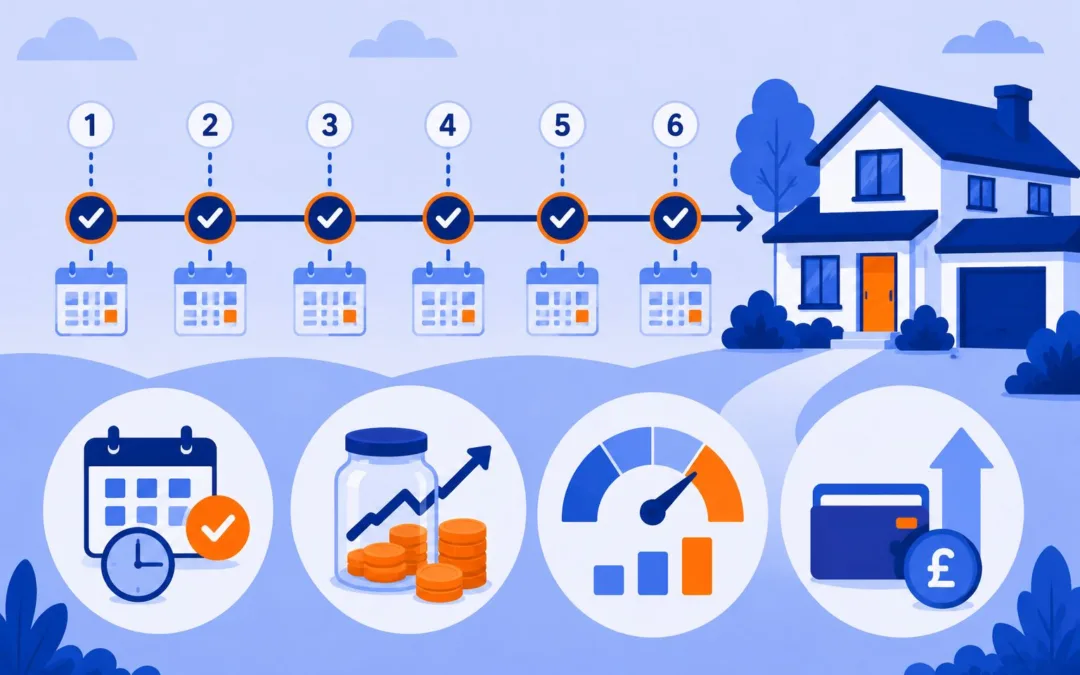
Understanding how long lenders want to see consistent behaviour is an important part of preparing for a mortgage application in the UK. Mortgage lenders are not only interested in your current financial position but also in how stable and reliable your financial behaviour has been over time. This includes income patterns, spending habits, credit usage, and overall financial management.
Most lenders assess consistency to reduce risk. A borrower who demonstrates stable income, controlled spending, and responsible credit use over a sustained period is generally viewed as lower risk compared to someone with fluctuating finances. However, the exact timeframe lenders expect can vary depending on the type of mortgage, employment status, and individual circumstances.
This guide explores how long lenders typically want to see consistent behaviour across different areas of your finances. It explains what lenders look for, why consistency matters, and how different borrower scenarios may be assessed. This information is intended to help you better understand lender expectations rather than provide personalised mortgage advice.
How long lenders want to see consistent behaviour in general
Most lenders typically want to see consistent financial behaviour for at least 3 to 6 months, although some may assess longer periods depending on the application.
For many standard residential mortgage applications, lenders review recent financial activity through bank statements, usually covering the last three to six months. This helps them assess income stability, spending patterns, and overall financial management. During this period, lenders will look for signs of responsible behaviour such as regular income deposits, controlled spending, and minimal reliance on overdrafts or credit.
In addition to short-term checks, lenders also review longer-term indicators such as credit history. This may span several years and includes repayment records, defaults, or missed payments. Even if recent behaviour appears stable, historical issues may still influence lending decisions.
The required timeframe may also vary depending on risk. Applicants with complex income, previous credit issues, or higher borrowing levels may be subject to more detailed scrutiny over longer periods.
Income consistency and employment history
Lenders usually want to see at least 3 to 12 months of consistent income, depending on employment type.
For employed applicants, lenders often require a minimum of three months of payslips, although some may ask for six months or more. They may also review employment history to ensure stability, particularly if the applicant has recently changed jobs or is still in a probationary period.
Self-employed applicants are typically assessed over a longer timeframe. Many lenders require at least two years of accounts or tax calculations to establish a reliable income pattern. In some cases, one year may be considered, but this often depends on the strength of the overall application.
Income consistency is important for affordability calculations. Fluctuating or irregular income may lead lenders to average earnings over time or apply more cautious assumptions, which could affect how much can be borrowed.
Credit history and repayment behaviour
Lenders often review credit history over the past 6 years, with particular focus on recent behaviour in the last 12 months.
Credit reports provide a detailed record of borrowing and repayment behaviour. Lenders assess whether payments have been made on time, how much credit is being used, and whether there are any adverse events such as defaults or county court judgments.
Recent behaviour tends to carry more weight. For example, a missed payment within the last 6 to 12 months may be viewed more negatively than one that occurred several years ago. Demonstrating a period of consistent, on-time repayments can help offset older issues.
Maintaining low credit utilisation and avoiding frequent credit applications may also support a stronger profile. These factors can indicate that the borrower is managing credit responsibly and not overextending financially.
Need help with your mortgage?
See what mortgage options may be available
If this guide sounds like your situation, send a few details and we can help organise the key information before introducing you to an FCA-regulated mortgage adviser where appropriate.
Make a mortgage enquiryNo obligation. Mortgage Bridge acts as a mortgage introducer.
Bank statements and spending habits
Lenders usually review 3 to 6 months of bank statements to assess spending consistency and financial discipline.
Bank statements provide insight into how applicants manage their day-to-day finances. Lenders look for regular income deposits, consistent bill payments, and evidence that spending is within reasonable limits relative to income.
Irregular or concerning patterns, such as frequent gambling transactions, heavy reliance on overdrafts, or recurring missed payments, may raise questions. Even if income is sufficient, inconsistent spending behaviour could affect affordability assessments.
Applicants are often expected to demonstrate a stable financial routine during this period. This may include maintaining a positive balance, avoiding unnecessary debt, and showing clear evidence of budgeting and financial control.
Consistency for buy-to-let mortgage applications
For buy-to-let mortgages, lenders typically assess both personal financial behaviour and property-related income over several months or years.
Buy-to-let lenders often focus on rental income potential and stress testing. However, they also review the applicant’s financial background, including credit history and existing commitments. Consistency in managing finances can support the overall application.
Landlords with existing properties may be assessed on their track record, including rental income stability and management of previous mortgages. Gaps in rental income or inconsistent property performance could be considered higher risk.
In addition, lenders may evaluate whether the applicant can cover mortgage payments during void periods. This involves reviewing income stability and available financial buffers over time.
How lenders assess changes in financial behaviour
Lenders may accept recent improvements in financial behaviour, but usually prefer to see at least 3 to 12 months of sustained consistency.
If an applicant has recently improved their financial habits, such as reducing debt or stabilising income, lenders will typically look for evidence that these changes are sustainable. A short period of improvement may not be sufficient on its own.
For example, clearing credit card balances or stopping overdraft use can strengthen an application, but lenders may still review how long this improved behaviour has been maintained. Longer periods of stability are generally more reassuring.
Applicants with previous adverse credit may find that demonstrating consistent behaviour over time helps rebuild lender confidence. However, specific requirements vary between lenders and depend on the severity and timing of past issues.
Practical borrower scenario: how consistency is assessed
A typical mortgage application may involve reviewing multiple aspects of financial consistency over different timeframes.
For example, consider a borrower applying for a residential mortgage with a 10% deposit. The lender may review three months of payslips, six months of bank statements, and a credit history covering several years. If the borrower recently changed jobs, additional checks may be carried out to confirm income stability.
If the same borrower had previously missed credit card payments but has maintained a clean record for the past 12 months, the lender may take this improvement into account. However, the earlier issues may still influence the decision depending on their severity.
This example illustrates how lenders combine short-term and long-term assessments. Consistency across income, spending, and credit behaviour helps build a more complete and reliable financial profile.
Why consistency matters for mortgage affordability
Consistency helps lenders assess affordability by showing that income and financial behaviour are stable and sustainable over time.
Mortgage affordability checks consider income, expenses, and future financial commitments. Consistent behaviour makes it easier for lenders to predict whether repayments can be maintained under different circumstances, including interest rate changes.
Irregular patterns may introduce uncertainty. For example, fluctuating income or inconsistent spending could make it harder to determine a reliable affordability level. This may lead to more cautious lending decisions or lower borrowing limits.
By demonstrating stable financial behaviour, applicants may be viewed as lower risk. This does not guarantee approval, but it can contribute positively to the overall assessment.
FAQ: How long lenders want to see consistent behaviour
How many months of bank statements do lenders check?
Most lenders review between 3 and 6 months of bank statements to assess income and spending patterns.
How long do I need stable income before applying for a mortgage?
Employed applicants typically need at least 3 months of stable income, while self-employed applicants often need 1 to 2 years of accounts.
Do lenders care more about recent or older credit history?
Lenders review both, but recent behaviour within the last 12 months often has a stronger impact on decisions.
Can I get a mortgage after improving my finances?
Some lenders may consider applications after financial improvement, but usually expect several months of consistent behaviour.
How far back do lenders look at financial behaviour?
Lenders may assess recent months in detail while also reviewing credit history going back up to 6 years.
This guide provides general information only. Personalised mortgage advice should always come from a regulated mortgage adviser authorised by the Financial Conduct Authority.
Check your credit in detail
View your full credit report
See your credit information from all three major credit reference agencies with Checkmyfile. Try it free, then it becomes a paid monthly subscription. You can cancel online anytime.
Check your credit report
Important information: Mortgage Bridge provides information only and acts as a mortgage introducer. We do not provide mortgage advice or make lender recommendations. We can introduce you to an FCA-regulated mortgage adviser who can provide personalised mortgage advice.