

How Much Can First-Time Buyers Borrow on a £40,000 Income?
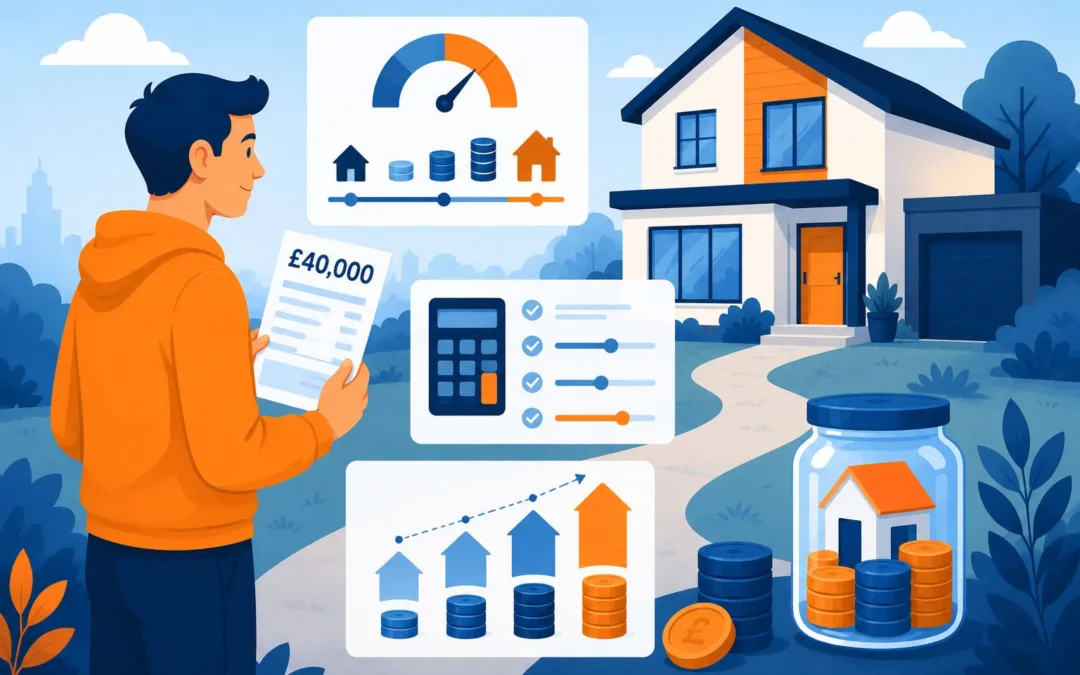
If you’re wondering how much you could borrow as a first-time buyer on a £40,000 income, the short answer is that many lenders may offer between £160,000 and £200,000. This is based on typical income multiples of around four to five times annual income. However, the amount you can borrow depends on much more than salary alone.
Mortgage lenders also assess your monthly spending, existing financial commitments, deposit size, credit history, and employment situation before deciding how much they’re prepared to lend. Understanding these factors can help you estimate your borrowing potential and prepare a stronger mortgage application.
How Much Can You Borrow on a £40,000 Salary?
Most mortgage lenders begin with an income multiple when assessing affordability. For many applicants, this falls between four and five times annual income.
For someone earning £40,000 per year, that could mean:
- 4 × income = approximately £160,000
- 4.5 × income = approximately £180,000
- 5 × income = approximately £200,000
Some lenders may offer higher income multiples for applicants with strong affordability and lower financial commitments, while others may lend less depending on their lending criteria.
Why Isn’t Salary the Only Factor?
Income is only one part of the affordability assessment. Mortgage lenders want to be confident that repayments remain affordable both now and if interest rates increase in the future.
They commonly consider:
- Existing loans and credit card balances
- Car finance agreements
- Student loan repayments
- Childcare costs
- Household expenditure
- Regular subscriptions and financial commitments
- Your overall credit history
Someone earning £40,000 with very few financial commitments may be able to borrow significantly more than another applicant with the same income but higher monthly outgoings.
How Much Deposit Will You Need?
Most first-time buyers will need at least a 5% deposit, although a larger deposit usually provides access to more lenders and potentially lower interest rates.
Typical Deposit Examples
- 5% deposit on a £200,000 property = £10,000
- 10% deposit = £20,000
- 15% deposit = £30,000
A larger deposit also reduces the loan-to-value ratio, which many lenders view more favourably.
Can You Borrow More Than Five Times Your Income?
Some lenders may offer higher income multiples in certain circumstances. These applications are usually subject to stricter affordability checks and may depend on factors such as:
- Excellent credit history
- Higher disposable income
- Professional occupations
- Stable employment
- Low levels of existing debt
Higher borrowing isn’t available to everyone, and affordability remains the deciding factor.
Does Credit History Affect How Much You Can Borrow?
Yes. Your credit history plays an important role in lender decisions.
Minor credit issues may have little impact, while more significant adverse credit could reduce borrowing limits or require a larger deposit. Some specialist lenders may still consider applicants with:
- Defaults
- County Court Judgments (CCJs)
- Missed payments
- Debt Management Plans
- Previous bankruptcy
The overall circumstances, including how recent the issues were and how your finances have been managed since, are often more important than the event itself.
Need help with your mortgage?
See what mortgage options may be available
If this guide sounds like your situation, send a few details and we can help organise the key information before introducing you to an FCA-regulated mortgage adviser where appropriate.
Make a mortgage enquiryNo obligation. Mortgage Bridge acts as a mortgage introducer.
You can learn more about how lenders assess adverse credit in our guide on bankruptcy mortgages and our guide explaining mortgages with a Debt Management Plan. :contentReference[oaicite:0]{index=0} :contentReference[oaicite:1]{index=1}
Can Self-Employed First-Time Buyers Borrow the Same Amount?
Many self-employed applicants can borrow similar amounts to employed applicants if they can demonstrate stable income.
Depending on the lender, they may ask for:
- SA302 tax calculations
- Tax Year Overviews
- Business accounts
- Bank statements
Some lenders assess average income over two or three years, while others may consider only the most recent year’s income if the business is performing well. :contentReference[oaicite:2]{index=2}
What Else Do Mortgage Lenders Look At?
Alongside affordability, lenders usually review your recent bank statements to understand how you manage your finances.
They may look for:
- Regular salary payments
- Consistent spending patterns
- Responsible overdraft usage
- Existing loan repayments
- Any unusual transactions that require explanation
They’re generally looking for evidence that your finances are well managed rather than expecting perfection. :contentReference[oaicite:3]{index=3}
Can You Buy Alone on a £40,000 Income?
Yes. Many people successfully purchase their first property on a single income.
Using typical lending multiples, someone earning £40,000 may be able to borrow between £160,000 and £200,000, subject to affordability checks.
If you’re applying alone, lenders simply assess your own income and financial commitments rather than combining two applicants’ incomes. Our guide on getting a mortgage on one income explains this in greater detail. :contentReference[oaicite:4]{index=4}
How Can You Improve Your Borrowing Potential?
Although every lender has different criteria, several factors may strengthen your application:
- Save a larger deposit.
- Reduce outstanding debts where possible.
- Maintain a strong payment history.
- Avoid unnecessary new credit applications before applying.
- Keep bank accounts well managed.
- Ensure all information on your credit reports is accurate.
Frequently Asked Questions
Can first-time buyers borrow £200,000 on a £40,000 salary?
Some lenders may lend up to five times income, making borrowing around £200,000 possible, although affordability and lender criteria will determine the final amount.
Will my deposit affect how much I can borrow?
Yes. A larger deposit often provides access to more lenders and can improve the mortgage products available.
Can bad credit reduce my borrowing?
Potentially. Some lenders may reduce borrowing limits, while specialist lenders may still consider applications depending on the type and age of the adverse credit.
Can self-employed applicants borrow the same amount?
Yes, provided they can demonstrate stable income through acceptable financial documentation.
Should I use an affordability calculator?
An affordability calculator can provide an initial estimate, but lenders complete a much more detailed assessment before making a formal lending decision.
This guide provides general information only. Personalised mortgage advice should always come from a regulated mortgage adviser.
Check your credit in detail
View your full credit report
See your credit information from all three major credit reference agencies with Checkmyfile. Try it free, then it becomes a paid monthly subscription. You can cancel online anytime.
Check your credit report
Important information: Mortgage Bridge provides information only and acts as a mortgage introducer. We do not provide mortgage advice or make lender recommendations. We can introduce you to an FCA-regulated mortgage adviser who can provide personalised mortgage advice.