
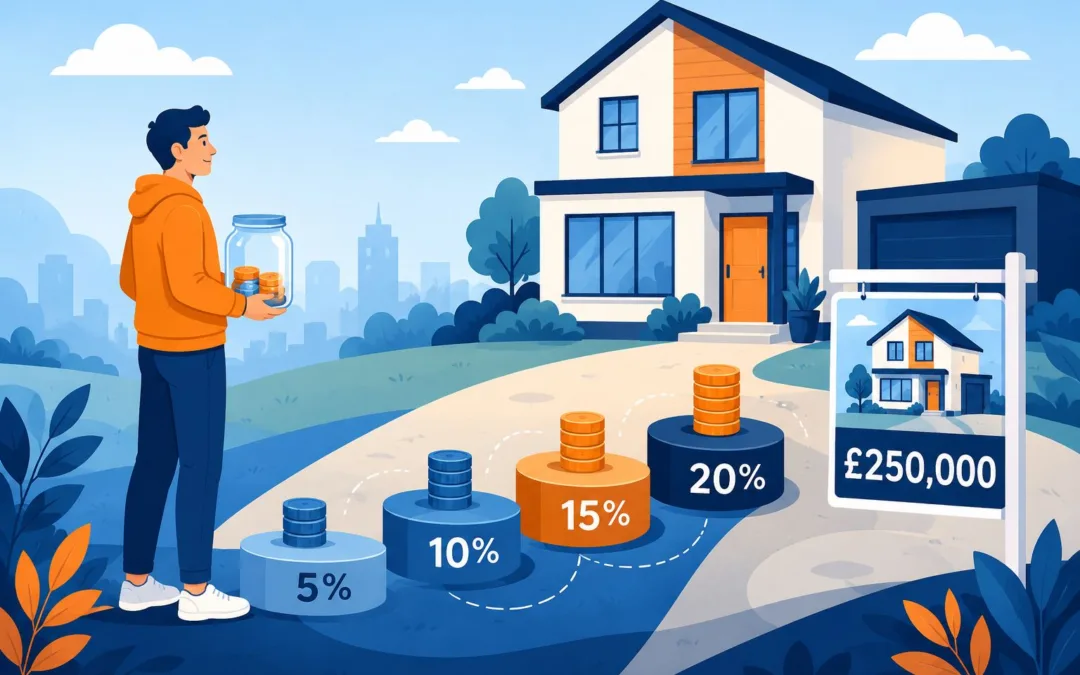

How Much Deposit Do First-Time Buyers Need for a £250,000 Property?
The deposit for a £250,000 property first-time buyer will need depends on the mortgage’s loan-to-value (LTV) ratio and the lender’s criteria. While some lenders offer mortgages with a 5% deposit, others may require 10%, 15% or more depending on your financial circumstances.
Your deposit is one of the biggest factors affecting the mortgages available to you. A larger deposit can improve your chances of approval, provide access to a wider range of lenders, and often result in lower interest rates.
This guide explains how much you may need to save for a £250,000 property, how lenders assess first-time buyers, and what you can do if saving a larger deposit is difficult.
What is the minimum deposit for a £250,000 property?
Many lenders offer mortgages with a minimum 5% deposit for eligible applicants.
For a £250,000 property, this would be:
| Deposit Percentage | Deposit Amount | Mortgage Required |
|---|---|---|
| 5% | £12,500 | £237,500 |
| 10% | £25,000 | £225,000 |
| 15% | £37,500 | £212,500 |
| 20% | £50,000 | £200,000 |
Although 5% is often the minimum, not every applicant will qualify for the highest loan-to-value products.
Why does the size of your deposit matter?
Your deposit affects both the lender’s risk and the mortgage products available.
A larger deposit generally means:
- Lower loan-to-value (LTV).
- More mortgage products to choose from.
- Potentially lower interest rates.
- Reduced monthly repayments.
- Greater likelihood of meeting lender criteria.
Borrowers with larger deposits often have more flexibility when comparing mortgage products.
What is loan-to-value (LTV)?
Loan-to-value measures how much you borrow compared with the property’s value.
For example:
- 5% deposit = 95% LTV
- 10% deposit = 90% LTV
- 15% deposit = 85% LTV
- 20% deposit = 80% LTV
Lower LTV mortgages are generally viewed as lower risk by lenders.
Can first-time buyers get a mortgage with a 5% deposit?
Yes. Many lenders offer 95% loan-to-value mortgages to eligible first-time buyers.
However, applicants will still need to satisfy affordability checks, income requirements and credit assessments.
Having a smaller deposit does not automatically prevent you from obtaining a mortgage, although the range of available products may be more limited.
Need help with your mortgage?
See what mortgage options may be available
If this guide sounds like your situation, send a few details and we can help organise the key information before introducing you to an FCA-regulated mortgage adviser where appropriate.
Make a mortgage enquiryNo obligation. Mortgage Bridge acts as a mortgage introducer.
What if you have bad credit?
First-time buyers with adverse credit may find that some lenders require a larger deposit.
The exact amount depends on factors including:
- The type of adverse credit.
- How recently it occurred.
- Your current financial position.
- Your income and affordability.
Some specialist lenders consider applicants with defaults, missed payments or County Court Judgments, although minimum deposit requirements may be higher than standard lending.
You can learn more about lender expectations in our guide to adverse credit mortgages.
How much income do you need?
Your deposit is only one part of the application.
Lenders also calculate how much you can borrow based on affordability.
They typically assess:
- Your employment or self-employed income.
- Regular monthly commitments.
- Existing credit agreements.
- Household expenditure.
- Future affordability.
The mortgage available must be affordable alongside your everyday living costs.
Can gifted deposits be used?
Yes. Many first-time buyers receive financial assistance from family members.
Gifted deposits are accepted by many lenders provided:
- The money is a genuine gift.
- It does not need to be repaid.
- The donor signs any required declarations.
Lenders may also request evidence showing where the gifted funds originated.
What other costs should first-time buyers budget for?
Your deposit is only part of the overall purchase cost.
Additional expenses may include:
- Solicitor or conveyancing fees.
- Property valuation fees.
- Survey costs.
- Mortgage arrangement fees where applicable.
- Removal expenses.
- Buildings insurance.
Having savings available beyond your deposit can make the buying process more manageable.
How can you improve your chances of approval?
Preparing well before applying may improve your mortgage options.
Useful steps include:
- Saving the largest deposit you reasonably can.
- Checking your credit reports for accuracy.
- Paying credit commitments on time.
- Avoiding unnecessary new borrowing.
- Reducing outstanding debts where possible.
- Keeping bank statements well managed.
We explain this further in our guide on what mortgage lenders look for on bank statements. :contentReference[oaicite:0]{index=0}
Frequently asked questions
What deposit do I need for a £250,000 property?
A 5% deposit is £12,500, while a 10% deposit is £25,000. Some lenders may require larger deposits depending on your circumstances.
Can I buy with only a 5% deposit?
Yes. Many lenders offer 95% loan-to-value mortgages for eligible first-time buyers.
Will a bigger deposit reduce my monthly payments?
Generally, yes. Borrowing less often leads to lower monthly repayments and may provide access to lower interest rates.
Can I use a gifted deposit?
Many lenders accept gifted deposits from close family members, provided the funds are genuinely gifted and appropriate declarations are completed.
Final thoughts
The deposit for a £250,000 property first-time buyer needs will vary according to lender criteria and personal circumstances. While a 5% deposit may be sufficient for some buyers, saving a larger deposit can improve lender choice, reduce borrowing costs and strengthen your application.
Understanding both the deposit required and the additional costs involved can help you prepare more confidently for your first property purchase.
You can learn more about first-time buyer mortgages, affordability and lender assessments in our other guides. If you want personalised advice, speaking to a regulated mortgage adviser may help.
This guide provides general information only. Personalised mortgage advice should always come from a regulated mortgage adviser.
Check your credit in detail
View your full credit report
See your credit information from all three major credit reference agencies with Checkmyfile. Try it free, then it becomes a paid monthly subscription. You can cancel online anytime.
Check your credit report
Important information: Mortgage Bridge provides information only and acts as a mortgage introducer. We do not provide mortgage advice or make lender recommendations. We can introduce you to an FCA-regulated mortgage adviser who can provide personalised mortgage advice.