

How Much First-Time Buyers Can Borrow on £30000 Income
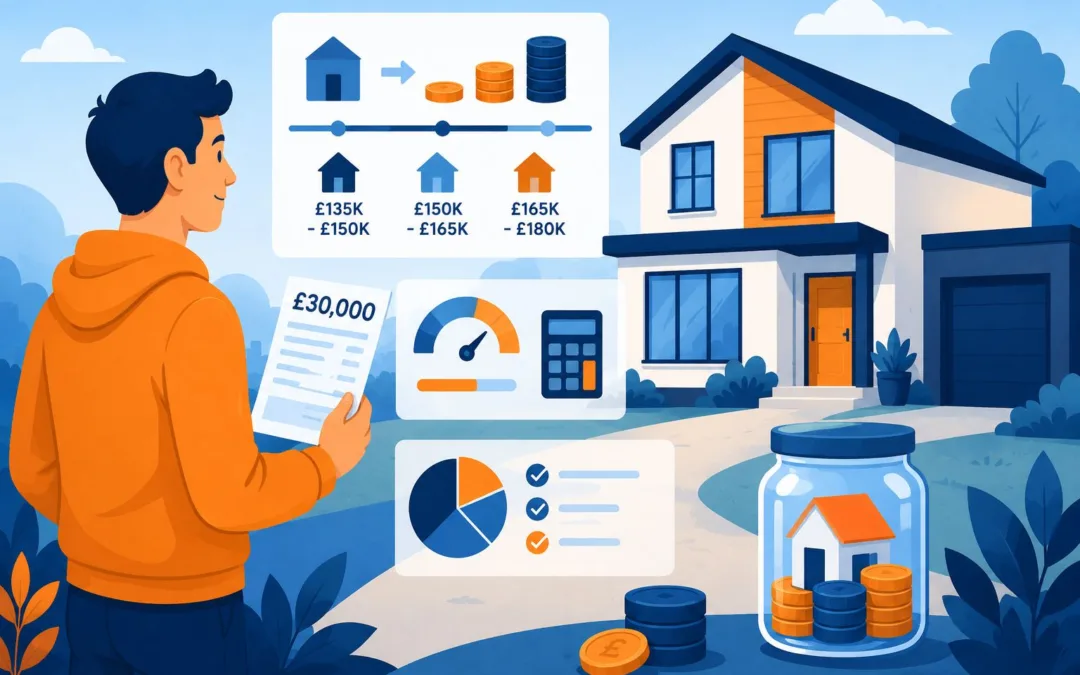
Understanding how much you can borrow on a £30000 income is one of the most important starting points for first-time buyers. Mortgage lenders in the UK use a combination of income multiples, affordability checks, and personal financial circumstances to determine borrowing limits. While £30000 is a common salary level, the amount available to borrow can vary significantly depending on factors such as deposit size, credit history, existing commitments, and overall financial stability.
When researching how much you can borrow on £30000 income, it is important to recognise that there is no single fixed answer. Instead, lenders apply their own criteria, which may include stress testing your ability to cope with future interest rate increases. This means two applicants with the same salary could receive different borrowing offers.
This guide explores how lenders typically assess affordability, what factors influence borrowing power, and what first-time buyers should consider before applying. It is designed to provide a clear, realistic overview of what may be achievable at this income level.
How Much Can You Borrow on £30000 Income?
Most lenders typically offer between 4 and 4.5 times annual income, meaning someone earning £30000 may be able to borrow approximately £120000 to £135000, subject to affordability checks.
Income multiples are often used as a starting point in mortgage calculations. For a £30000 salary, a 4x multiplier would suggest borrowing around £120000, while a 4.5x multiplier could increase this to £135000. Some lenders may offer higher multiples in specific cases, particularly where applicants have strong credit profiles and stable employment histories. However, these higher multiples are not guaranteed and depend on strict affordability criteria.
It is important to understand that income multiples alone do not determine borrowing limits. Lenders will also assess monthly outgoings, including rent, loans, credit cards, and household expenses. These commitments can reduce the maximum amount available, even if the income multiple suggests a higher figure.
Additionally, lenders apply stress testing to ensure repayments remain affordable if interest rates rise. This can further reduce borrowing capacity. As a result, the actual mortgage offer may be lower than initial estimates based solely on salary.
What Factors Affect Borrowing on £30000 Income?
Several factors beyond income influence how much you can borrow, including credit history, financial commitments, and employment stability.
Credit history plays a significant role in mortgage assessments. A strong credit record with consistent repayments and low outstanding debt may support higher borrowing levels. Conversely, missed payments, defaults, or high credit utilisation can reduce lender confidence and limit borrowing capacity.
Monthly financial commitments are also carefully reviewed. Expenses such as car finance, personal loans, childcare costs, and student loan repayments can reduce disposable income. Lenders use this information to calculate how much is realistically affordable each month.
Employment type and stability are equally important. Applicants in permanent roles with consistent income are generally viewed more favourably than those with variable earnings, such as self-employed individuals or those on zero-hours contracts. However, many lenders will still consider different employment types with sufficient evidence of income.
How Deposit Size Impacts Your Mortgage Options
A larger deposit can improve borrowing options, access to better interest rates, and overall affordability.
For first-time buyers earning £30000, deposit size is a key factor in determining the type of mortgage available. A minimum deposit is often 5% of the property value, but putting down 10% or more can significantly improve the range of products available. Larger deposits reduce the loan-to-value (LTV) ratio, which lowers the lender’s risk.
Lower LTV mortgages often come with more competitive interest rates, which can reduce monthly repayments. This can make a higher borrowing amount more manageable within affordability calculations. For example, a buyer with a 15% deposit may access better rates than someone with a 5% deposit.
Saving a larger deposit can also provide a buffer against property value changes and reduce the risk of negative equity. While it may take longer to save, it can improve long-term financial stability and mortgage flexibility.
Need help with your mortgage?
See what mortgage options may be available
If this guide sounds like your situation, send a few details and we can help organise the key information before introducing you to an FCA-regulated mortgage adviser where appropriate.
Make a mortgage enquiryNo obligation. Mortgage Bridge acts as a mortgage introducer.
How Lenders Assess Affordability for First-Time Buyers
Lenders assess affordability by analysing income, expenses, and future financial resilience rather than relying solely on salary multiples.
Affordability assessments involve reviewing detailed financial information, including bank statements and spending habits. Lenders look at essential expenses such as utilities, food, and transport, as well as discretionary spending. This helps determine how much surplus income is available for mortgage repayments.
Stress testing is a standard part of the process. Lenders model whether repayments would remain affordable if interest rates increased. This is particularly important in a changing economic environment, where rates may fluctuate over time.
Additional factors such as dependants and lifestyle costs are also considered. For example, applicants with children or higher living expenses may be offered lower borrowing amounts, even with the same salary as someone with fewer financial commitments.
Property Prices and Regional Differences
The amount you can borrow on £30000 income must be considered alongside property prices in your chosen location.
Property prices vary widely across the UK, which can significantly affect what is achievable on a £30000 salary. In some regions, borrowing £120000 to £135000 may be sufficient to purchase a property, particularly in areas with lower average house prices. However, in more expensive regions, such as parts of the South East, this budget may be more restrictive.
First-time buyers may need to consider compromises such as smaller properties, different locations, or shared ownership schemes. These options can make homeownership more accessible within affordability limits.
It is also worth considering additional costs such as stamp duty (where applicable), legal fees, and moving expenses. These costs can impact the overall budget and should be factored into financial planning.
Example Scenario: First-Time Buyer on £30000 Salary
A typical borrower earning £30000 may be able to borrow around £125000, depending on their financial profile and commitments.
For example, consider a first-time buyer earning £30000 annually with a 10% deposit saved. If they have minimal outstanding debt and a strong credit history, a lender may offer around 4.2 times their income, resulting in a borrowing amount of approximately £126000. Combined with a deposit of £14000, this could support a property purchase of around £140000.
However, if the same borrower has a car loan and credit card balances, their affordability may be reduced. The lender may lower the borrowing amount to reflect monthly repayments, potentially bringing the maximum loan closer to £110000.
This example highlights how individual circumstances can influence outcomes. Even with the same income, borrowing limits can vary depending on financial commitments and credit profile.
What First-Time Buyers Should Consider Before Applying
Preparation is key when determining how much you can borrow on £30000 income and improving your chances of approval.
Reviewing your credit report before applying can help identify any issues that may affect borrowing. Addressing errors or improving credit behaviour over time may strengthen your application. Maintaining low balances and making payments on time are common factors lenders consider positively.
Reducing existing debts can also improve affordability. Paying down loans or credit cards may increase disposable income, which can support a higher borrowing amount. Even small reductions in monthly commitments can have a noticeable impact on lender calculations.
Saving a larger deposit and building a stable financial profile can improve access to a wider range of mortgage products. While it may take time, these steps can enhance borrowing potential and provide more favourable terms.
Frequently Asked Questions
Can I get a mortgage on £30000 salary as a first-time buyer?
Yes, many lenders consider applicants earning £30000, although the amount you can borrow will depend on affordability checks, deposit size, and financial commitments.
What is the maximum mortgage on £30000 income?
Typically, lenders may offer between £120000 and £135000, although this can vary depending on individual circumstances and lender criteria.
Does a larger deposit increase borrowing amount?
A larger deposit can improve mortgage options and interest rates, which may make higher borrowing more affordable within lender assessments.
Do debts affect how much I can borrow?
Yes, existing debts such as loans and credit cards reduce disposable income and can lower the amount lenders are willing to offer.
Are higher income multiples available?
Some lenders may offer higher income multiples in certain cases, but these are subject to strict affordability and risk assessments.
This guide provides general information only. Personalised mortgage advice should always come from a regulated mortgage adviser authorised by the Financial Conduct Authority.
Check your credit in detail
View your full credit report
See your credit information from all three major credit reference agencies with Checkmyfile. Try it free, then it becomes a paid monthly subscription. You can cancel online anytime.
Check your credit report
Important information: Mortgage Bridge provides information only and acts as a mortgage introducer. We do not provide mortgage advice or make lender recommendations. We can introduce you to an FCA-regulated mortgage adviser who can provide personalised mortgage advice.