

How Long Clean Bank Statements Really Matter for a Mortgage
When applying for a mortgage, many borrowers wonder how long clean bank statements really matter and whether a few months of improved finances can make a difference. Mortgage lenders in the UK commonly review bank statements as part of their affordability and risk assessment, using them to understand spending habits, income stability and financial behaviour. While the exact timeframe and requirements vary, bank statements can play a significant role in how a mortgage application is assessed.
Clean bank statements generally refer to accounts that show consistent income, controlled spending, and no signs of financial stress such as missed payments or excessive overdraft use. However, lenders typically look beyond just a snapshot of recent activity. They assess patterns over time to determine whether a borrower’s financial position is sustainable.
This guide explains how long clean bank statements really matter, what lenders look for, and how different borrower scenarios may be assessed. It also explores how bank statement history links to broader mortgage affordability checks and overall lending criteria.
How long clean bank statements really matter in mortgage applications
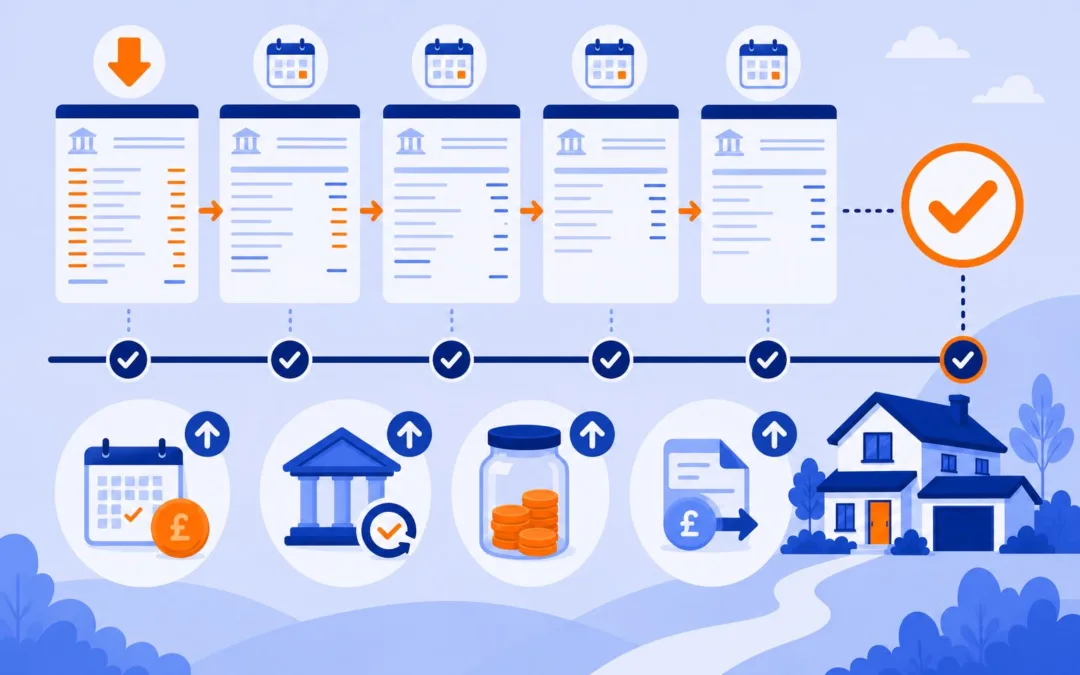
Lenders typically require between three and six months of bank statements, but how long clean bank statements really matter can extend beyond that timeframe depending on the borrower’s situation.
Most UK mortgage lenders ask for at least three months of bank statements as a standard requirement. However, some lenders may request six months or more, particularly if income is variable or the application presents higher perceived risk. This allows them to identify patterns rather than relying on a short-term improvement in financial behaviour.
Even if only three months are requested, lenders may still consider information from credit reports and other financial records that provide a longer-term view. This means a recent effort to improve finances may help, but it may not fully offset earlier issues such as missed payments or heavy borrowing.
For borrowers, this highlights the importance of maintaining consistent financial habits over time. A short period of clean bank statements may be beneficial, but lenders are generally focused on sustainability rather than temporary changes.
What lenders look for in bank statements
Lenders use bank statements to assess income, spending patterns, and overall financial management when reviewing a mortgage application.
One of the primary checks involves verifying income. Lenders look for regular salary payments or consistent self-employed income that matches declared earnings. Any discrepancies may raise questions and could require additional documentation.
Spending behaviour is another key factor. Regular gambling transactions, high discretionary spending, or frequent use of overdrafts may indicate financial pressure. Lenders are not only assessing affordability but also how responsibly money is managed.
In addition, lenders look for existing financial commitments such as loan repayments, childcare costs, or subscriptions. These are factored into affordability calculations, reducing the amount that may be available for mortgage repayments.
Do a few clean months make a difference?
A few clean months can improve how an application appears, but lenders typically assess longer-term financial behaviour rather than short-term changes.
If a borrower has recently reduced spending, cleared debts, or stopped using an overdraft, this may positively influence the application. However, lenders may still identify previous patterns through earlier statements or credit history.
For example, if gambling transactions or missed payments were present six months ago but not in the most recent three months, some lenders may still consider this when assessing risk. The significance depends on the lender’s criteria and overall application strength.
This means that while short-term improvements can help, a longer track record of stable finances is usually more persuasive. Borrowers often benefit from maintaining clean accounts for several months before applying.
Need help with your mortgage?
See what mortgage options may be available
If this guide sounds like your situation, send a few details and we can help organise the key information before introducing you to an FCA-regulated mortgage adviser where appropriate.
Make a mortgage enquiryNo obligation. Mortgage Bridge acts as a mortgage introducer.
How bank statements affect mortgage affordability
Bank statements directly influence mortgage affordability by showing how much disposable income a borrower realistically has.
Lenders calculate affordability using income alongside regular outgoings. Bank statements provide evidence of these outgoings, including essential costs such as rent, utilities, and transport, as well as discretionary spending.
High levels of non-essential spending may lead lenders to reduce the amount they are willing to lend. Even if income appears sufficient, spending habits can suggest that repayments may be difficult to sustain.
Stress testing is another factor. Lenders assess whether borrowers could still afford repayments if interest rates increase. Bank statements help determine whether there is enough financial flexibility to manage potential future changes.
Common issues found in bank statements
Certain patterns in bank statements may raise concerns for lenders and potentially affect a mortgage application.
Frequent overdraft usage is one of the most common issues. While occasional use may be acceptable, relying on an overdraft regularly can indicate financial strain. Lenders may view this as a sign that managing additional debt could be challenging.
Gambling transactions are another area lenders monitor closely. Regular or high-value gambling activity may lead to further scrutiny or even application declines, depending on the lender’s policies.
Missed payments, returned direct debits, or payday loan usage can also be red flags. These suggest potential financial instability and may impact both affordability assessments and overall lending decisions.
Practical borrower scenario: how lenders may assess bank statements
A borrower earning £35,000 applies for a mortgage with a 10% deposit and provides three months of bank statements showing improved financial behaviour.
In the most recent three months, the borrower has reduced discretionary spending, avoided overdraft use, and maintained a consistent savings pattern. On the surface, this presents a strong case for affordability and responsible financial management.
However, the lender also reviews earlier data through credit reports and notices that six months prior, the borrower had frequent overdraft usage and several missed payments. Depending on the lender, this history may still influence the assessment.
Some lenders may accept the application if the recent improvement appears sustainable and other aspects of the application are strong. Others may require a longer period of clean financial behaviour before approving the mortgage.
How to prepare your bank statements before applying
Preparing bank statements in advance can help present a more stable financial profile to lenders.
Reducing unnecessary spending is often a key step. This includes limiting discretionary purchases and avoiding transactions that may raise concerns, such as gambling or frequent transfers to credit accounts.
Maintaining a positive balance and avoiding overdraft use can also improve how statements are viewed. Consistency is important, as lenders look for patterns rather than isolated improvements.
Ensuring all income is clearly identifiable and matches supporting documents is equally important. This helps streamline the application process and reduces the likelihood of additional queries from lenders.
How long should you keep finances clean before applying?
While requirements vary, maintaining clean bank statements for at least three to six months is commonly expected by lenders.
For borrowers with more complex financial histories, such as previous missed payments or irregular income, a longer period of stability may be beneficial. Some lenders may prefer to see six to twelve months of consistent financial behaviour.
First-time buyers and those with straightforward financial profiles may find that three months is sufficient, provided there are no significant concerns in their wider financial history.
Ultimately, lender criteria differ, and there is no universal rule. A regulated mortgage adviser may be able to provide personalised insight based on individual circumstances and current lender requirements.
Frequently Asked Questions
How many months of bank statements do mortgage lenders need?
Most lenders require three to six months of bank statements, although this can vary depending on the borrower’s income type and financial situation.
Can poor bank statements stop you getting a mortgage?
Yes, certain issues such as missed payments, gambling transactions or heavy overdraft use may affect a lender’s decision, particularly if they indicate financial instability.
Do lenders check spending habits on bank statements?
Lenders typically review spending patterns to assess affordability and financial behaviour, including discretionary spending and regular commitments.
Is three months of clean bank statements enough?
Three months may be sufficient for some applications, but lenders often consider longer-term financial behaviour through additional data sources.
How can I improve my bank statements before applying?
Improving bank statements may involve reducing unnecessary spending, avoiding overdrafts, maintaining consistent income, and ensuring all financial commitments are up to date.
This guide provides general information only. Personalised mortgage advice should always come from a regulated mortgage adviser authorised by the Financial Conduct Authority.
Check your credit in detail
View your full credit report
See your credit information from all three major credit reference agencies with Checkmyfile. Try it free, then it becomes a paid monthly subscription. You can cancel online anytime.
Check your credit report
Important information: Mortgage Bridge provides information only and acts as a mortgage introducer. We do not provide mortgage advice or make lender recommendations. We can introduce you to an FCA-regulated mortgage adviser who can provide personalised mortgage advice.