
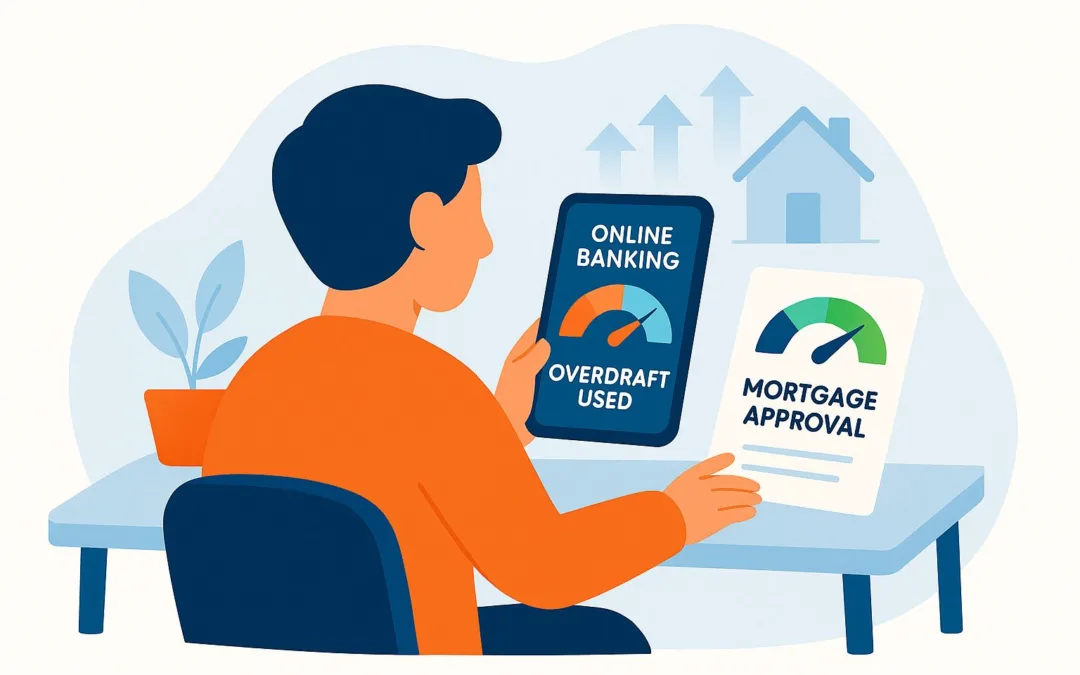

Can an Overdraft Affect Your Mortgage Application? What Lenders Really Think
Many borrowers use overdrafts as a buffer, especially around payday. But when you’re preparing to apply for a mortgage, you might wonder: can an overdraft affect your mortgage application? The answer is yes — but not always in the way people expect. Lenders look carefully at overdraft activity because it provides real-time insight into your financial behaviour.
This guide explains how lenders assess overdraft use, what counts as a risk, and how you can prepare your bank statements before applying. This article gives general information only and does not offer regulated mortgage advice.
Do Lenders Check Your Overdraft During Mortgage Applications?
Yes. Lenders request 3–6 months of bank statements and examine them closely. Overdraft use helps lenders understand:
- How you manage your day-to-day finances
- Whether you rely on borrowing to cover expenses
- Whether your spending patterns are stable
- Whether income is sufficient and consistent
- Whether you have cash-flow issues
A bank statement tells lenders more about real financial behaviour than a credit score alone.
Can an Overdraft Affect Your Mortgage Application?
Yes — overdraft use can influence affordability assessments, risk scoring and overall lender confidence.
However, not all overdraft use is treated equally. Lenders distinguish between:
- Occasional overdraft use
- Regular overdraft reliance
- Unarranged overdraft activity
Understanding the differences is key.
How Lenders View Different Types of Overdraft Use
1. Arranged Overdraft Used Occasionally
This is usually acceptable.
Lenders may see it as:
- Normal cash-flow management
- Low risk if the account returns to credit regularly
- A non-issue if all other conduct is strong
Occasional dipping into an arranged overdraft rarely causes problems.
2. Regular or Persistent Overdraft Use
Using an overdraft every month — especially if you reach the limit — raises concerns.
Lenders may view this as:
- Evidence of financial stress
- Reduced affordability
- A sign that you may struggle with additional commitments
Even if the overdraft is arranged, persistent use could affect approval.
This is a significant red flag for lenders.
Unarranged overdrafts indicate:
Need help with your mortgage?
See what mortgage options may be available
If this guide sounds like your situation, send a few details and we can help organise the key information before introducing you to an FCA-regulated mortgage adviser where appropriate.
Make a mortgage enquiryNo obligation. Mortgage Bridge acts as a mortgage introducer.
- Poor money management
- High risk of missed payments
- Potential affordability stress
Even one incident in the last 3–6 months may require explanation or could limit lender choice.
4. Overdrafts Showing Returned Payments
Returned direct debits or card payments can seriously impact an application.
Lenders interpret them as:
- Financial instability
- Inadequate income-to-spending balance
- Possible budgeting issues
This often triggers deeper underwriting checks.
How Overdrafts Influence Mortgage Affordability
Affordability assessments rely on your disposable income — not just gross salary.
Overdraft behaviour can:
- Reduce available surplus income
- Increase perceived risk
- Lead lenders to lower borrowing limits
Some lenders use internal scoring models where overdraft use directly affects approval.
How Long Do Lenders Look at Overdraft History?
Most lenders ask for 3 months of statements, but some request 6 months — especially if:
- Income is variable
- You are self-employed
- You have existing debts
- There are signs of irregular spending
Consistent good behaviour in the months before applying is important.
What If You Live in Your Overdraft?
Being in your overdraft for most of the month does not automatically mean decline, but it does limit lender choice.
Lenders consider:
- The size of the overdraft
- Whether you rely on it to pay bills
- Whether the account ever goes into credit
- Other debts and spending patterns
If you consistently end the month in negative balance, a lender may ask for explanations or suggest waiting until your financial situation improves.
How Overdrafts Affect First-Time Buyers
First-time buyers are often more scrutinised because they have no previous mortgage conduct. Lenders rely heavily on:
- Bank statements
- Payment patterns
- Spending habits
For a first-time buyer, showing controlled overdraft use — or avoiding it entirely — helps strengthen the application.
How Overdrafts Affect Buy to Let Applicants
Buy-to-let mortgages focus more on rental income, but personal financial behaviour still matters.
An overdraft may affect:
- Lender choice
- Personal income minimums
- Borrowing capacity
- Internal risk scores
Specialist lenders may be more flexible as long as there are no recent unarranged overdrafts.
Can You Still Get Approved with Overdraft Use?
Yes — in many cases.
You may still be approved if:
- Overdraft use is arranged
- You avoid unarranged overdrafts
- Income is stable
- No payments are missed
- Your account rises into credit regularly
- Other credit behaviour is positive
Even some specialist lenders accept applicants with overdraft challenges if the rest of the application is strong.
How to Improve Your Chances if You Use an Overdraft
(General Information Only)
1. Reduce Overdraft Reliance
Start keeping your balance positive at least once a month.
2. Avoid Unarranged Overdrafts Entirely
This is one of the most important steps, as unarranged overdrafts carry the highest risk.
3. Build a Buffer Before Applying
Even a small buffer (£100–£300) can show improved financial behaviour.
4. Reduce Spending for 2–3 Months
Lower discretionary spending helps show affordability.
5. Pay Off Other Debts Where Possible
Reducing commitments helps free up surplus income.
6. Review Your Bank Statements for Patterns
Lenders look at:
- Gambling
- Large cash withdrawals
- Frequent transfers
- High-cost borrowing
Managing these areas improves the overall application.
7. Use Savings to Clear the Overdraft
If possible, clearing your overdraft before applying creates a cleaner profile.
Common Overdraft Scenarios and Likely Outcomes
Scenario 1: Occasional arranged overdraft use
Usually acceptable.
Scenario 2: Overdraft used every month but always arranged
Lender choice may narrow, but approval is still possible.
Scenario 3: Multiple unarranged overdrafts in three months
High likelihood of decline with mainstream lenders.
Scenario 4: One unarranged overdraft due to a single mistake
Still possible with explanation and clean recent conduct.
Scenario 5: Overdraft plus missed payments
More specialist lenders may be required.
Summary
So, can an overdraft affect your mortgage application?
Yes — lenders assess how you use your overdraft to understand your financial stability and affordability. The key factors include:
- Whether the overdraft is arranged
- How often it is used
- Whether you rely on it
- Bank statement conduct
- Your overall financial behaviour
Occasional use is usually fine. Persistent or unarranged overdrafts may require more careful preparation or specialist lender support.
This article provides general information only. For personalised advice, regulated mortgage guidance is required.
Check your credit in detail
View your full credit report
See your credit information from all three major credit reference agencies with Checkmyfile. Try it free, then it becomes a paid monthly subscription. You can cancel online anytime.
Check your credit report
Important information: Mortgage Bridge provides information only and acts as a mortgage introducer. We do not provide mortgage advice or make lender recommendations. We can introduce you to an FCA-regulated mortgage adviser who can provide personalised mortgage advice.